A guide to one of the world’s most remarkable natural fibres
For centuries, communities living in the Himalayan mountains of Nepal have harvested a wild plant that produces one of the world’s longest and most versatile natural fibres. Known as Himalayan nettle, this remarkable plant has been used to create ropes, baskets, textiles, and everyday household items long before the modern textile industry existed.
Today, Himalayan nettle fibre is gaining renewed attention among designers, makers, and conscious consumers seeking natural alternatives to synthetic materials. Combining strength, beauty, and a unique connection to place, it offers a compelling example of how traditional fibre knowledge can contribute to a more responsible textile future.
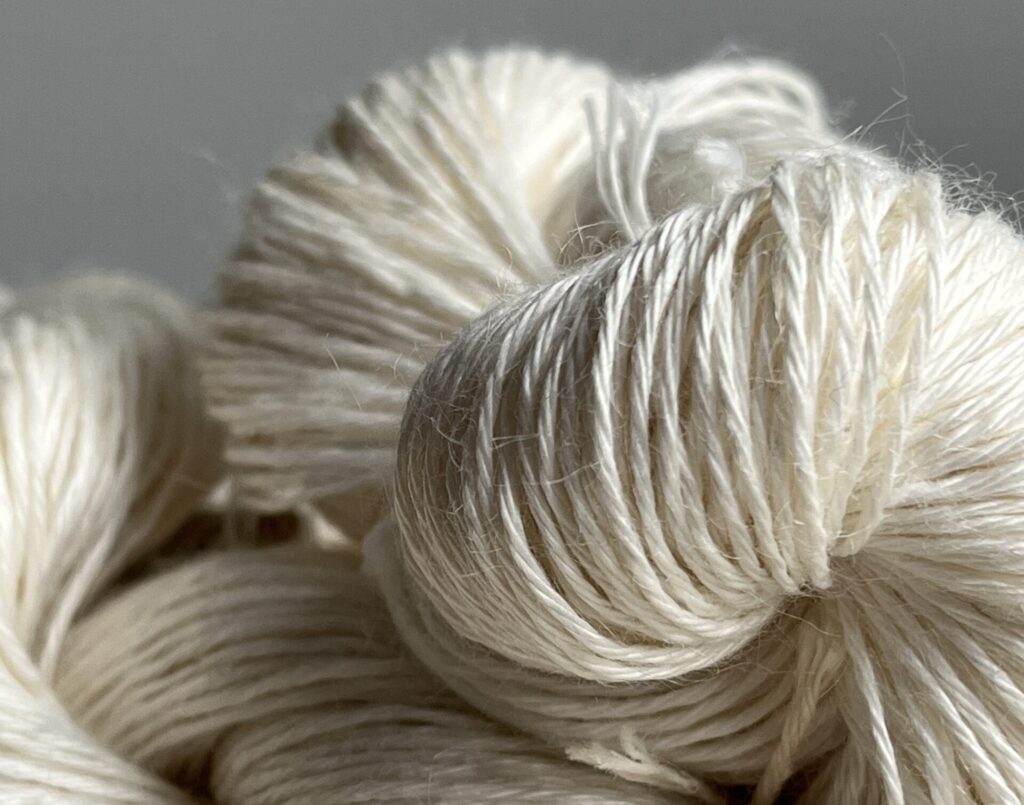
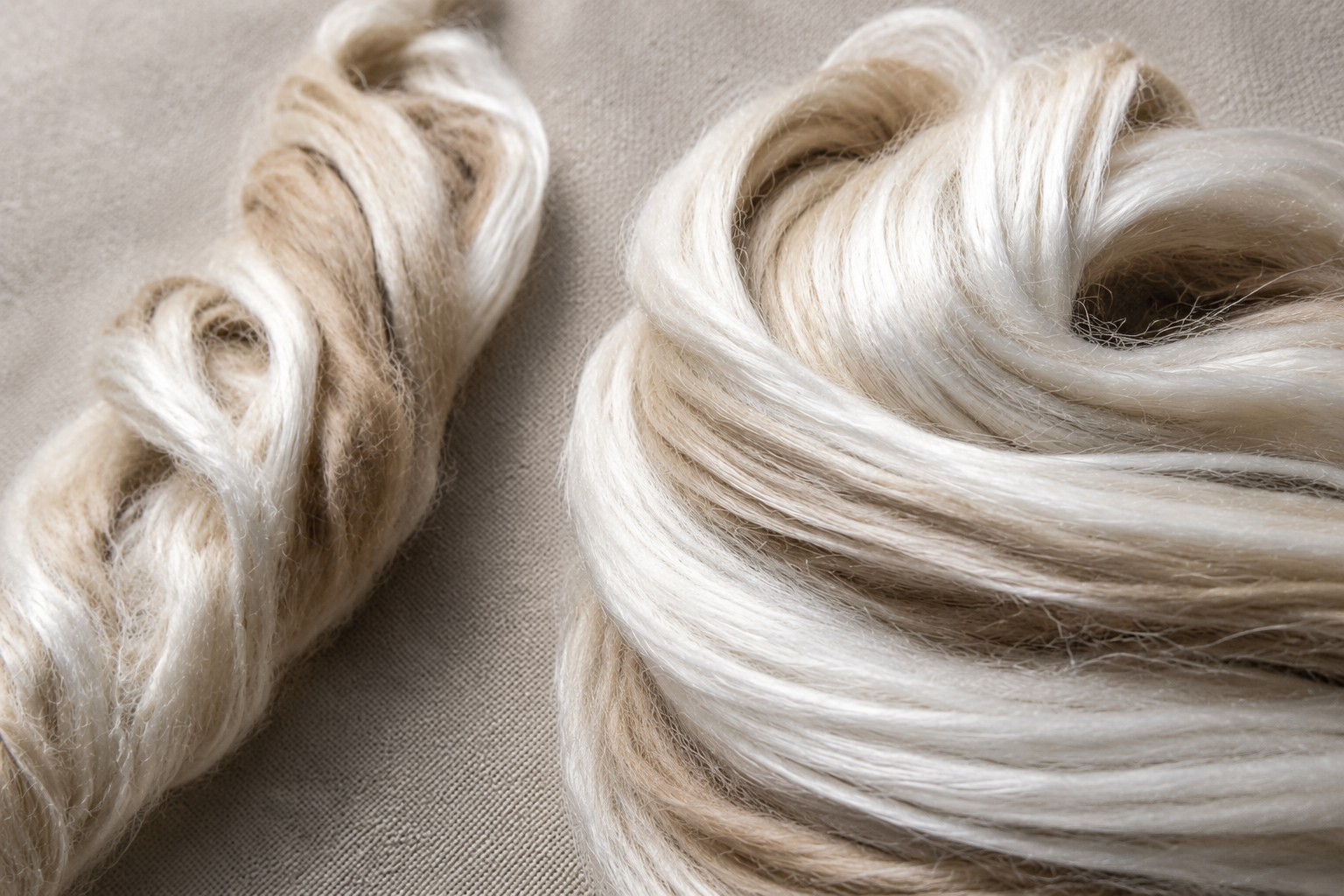
100% Himalayan nettle yarn spun in Italy by Maeko Srl
What Is Himalayan nettle?
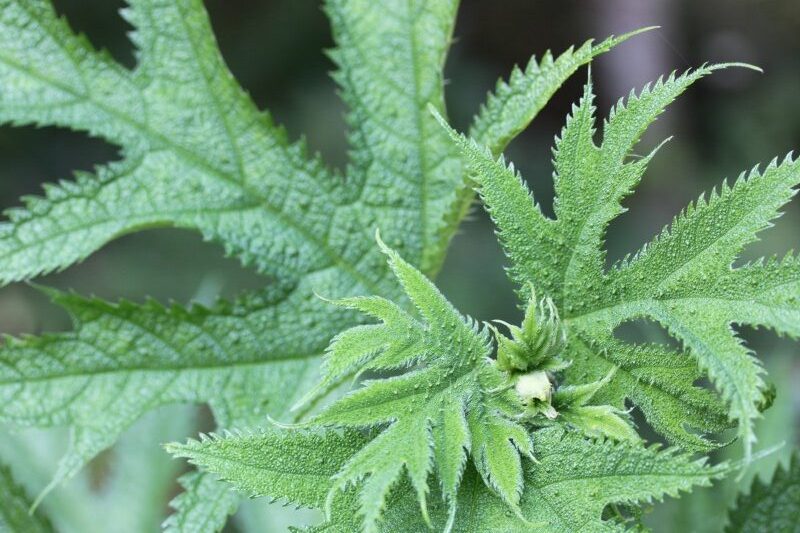
Himalayan nettle (Girardinia diversifolia) is a wild plant native to the Himalayan region, particularly Nepal. Unlike the common stinging nettles found in European gardens, Himalayan nettle grows at high altitudes, often above 2,000 metres, in forested mountain environments.
The plant thrives naturally without cultivation, irrigation, or chemical inputs. Each year, its stems can grow more than three metres tall before being harvested by hand. Once processed, the bark yields exceptionally long fibres known for their durability, lustre, and versatility.
Because the plant grows spontaneously in the wild, Himalayan nettle represents a unique example of a textile fibre that is gathered rather than farmed on an industrial scale.
Today, Himalayan nettle fibre is gaining renewed attention among designers, makers, and conscious consumers seeking natural alternatives to synthetic materials. Combining strength, beauty, and a unique connection to place, it offers a compelling example of how traditional fibre knowledge can contribute to a more responsible textile future.
Himalayan nettle - Girardinia diversifolia
Is Himalayan nettle a bast fibre?
Yes. Himalayan nettle belongs to a family of plant fibres known as bast fibres, alongside flax (linen), hemp, ramie, and jute.
Bast fibres are extracted from the stem of a plant, where long, strong fibres provide structural support as the plant grows. This gives them excellent durability, breathability, and tensile strength.
This is different from fibres such as TENCEL™ Lyocell or viscose, which are regenerated cellulose fibres. While these are also derived from plants, the original plant material is dissolved and transformed during manufacturing before being spun into fibre.
Because Himalayan nettle is a bast fibre, it retains many of the characteristics associated with traditional plant fibres, including strength, longevity, and a distinctive natural texture. At the same time, it is often appreciated for its silk-like lustre and softness compared with other bast fibres such as hemp.
A fibre rooted in traditional knowledge
For generations, Himalayan communities have relied on nettle as part of everyday life. The plant has traditionally been used for textiles, ropes, fishing nets, bags, mats, medicine, fodder, and food.
Harvesting and processing nettle fibre requires specialised knowledge passed down through generations. The stems are collected by hand, stripped, and processed to extract the fibres while preserving their natural length and strength.
This connection between fibre production and local knowledge is one of the reasons Himalayan nettle remains such a culturally significant material today.
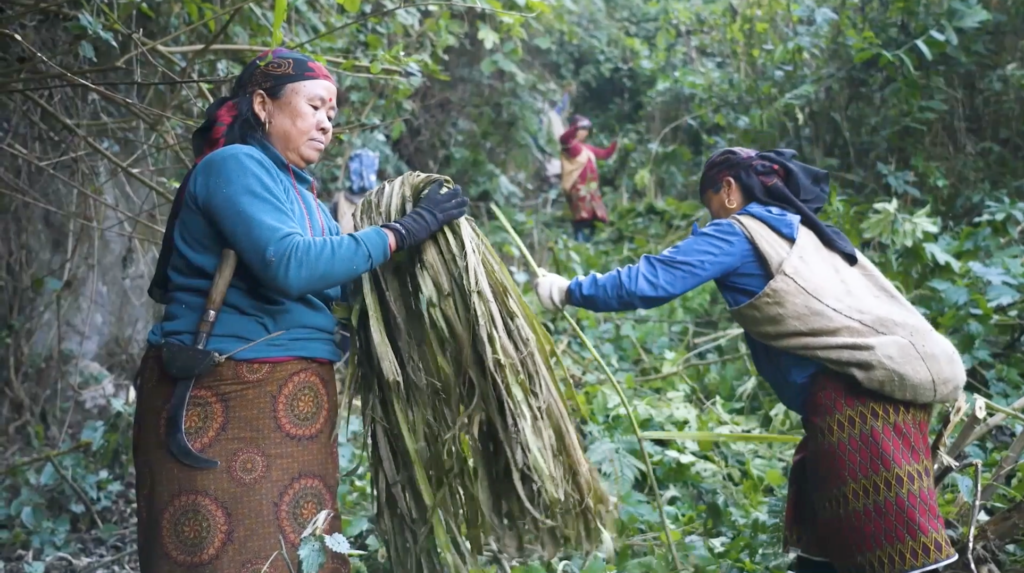
Bark strands peeled from the plant. The early stage of fibre processing happens in the forest that grows it.
Why is Himalayan nettle considered sustainable?
Many natural fibres are promoted as environmentally friendly, but Himalayan nettle possesses several characteristics that make it particularly interesting from an ecological perspective.
Because it grows wild in mountain ecosystems, the plant does not require cultivated farmland, irrigation systems, or synthetic fertilisers. Annual harvesting encourages new growth and helps maintain healthy plant populations.
Its extensive root system also contributes to soil stabilisation in steep mountain regions that are vulnerable to erosion and landslides. By helping anchor soil, the plant plays an important role in supporting ecosystem resilience.
Furthermore, nettle habitats provide shelter and food sources for a variety of insects and wildlife, contributing to biodiversity within Himalayan landscapes.
While no fibre is entirely impact-free, Himalayan nettle demonstrates how textile materials can be sourced in ways that work with natural systems rather than against them.
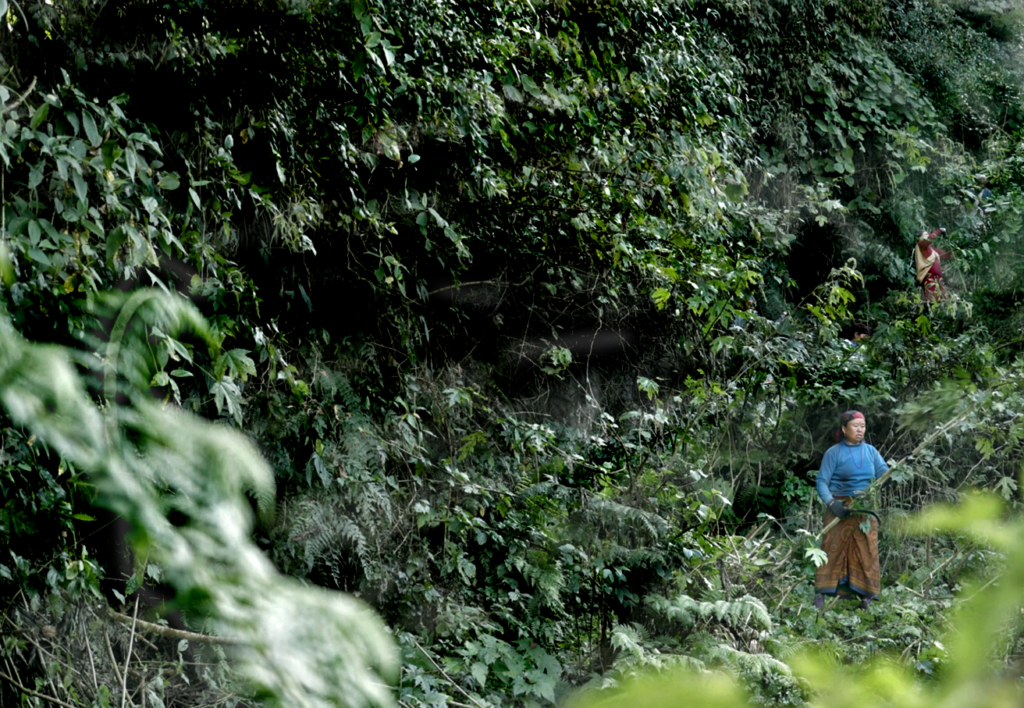
The forest where Himalayan nettle grows. A beautiful green ecosystem that protects the soil from erosion.
What does Himalayan nettle fibre feel like?
One of the most surprising qualities of Himalayan nettle fibre is its appearance and handle.
Often described as having a silk-like lustre, the fibre naturally reflects light and brings subtle brilliance to yarns and textiles. At the same time, it offers excellent strength and durability, making it suitable for both fashion and craft applications.
When blended with fibres such as wool, alpaca, or TENCEL™, Himalayan nettle can add structure, drape, and visual depth while maintaining softness and comfort.
Many knitters and crocheters discover that nettle creates a unique tactile experience that feels distinct from more familiar fibres such as cotton, acrylic, or even linen.
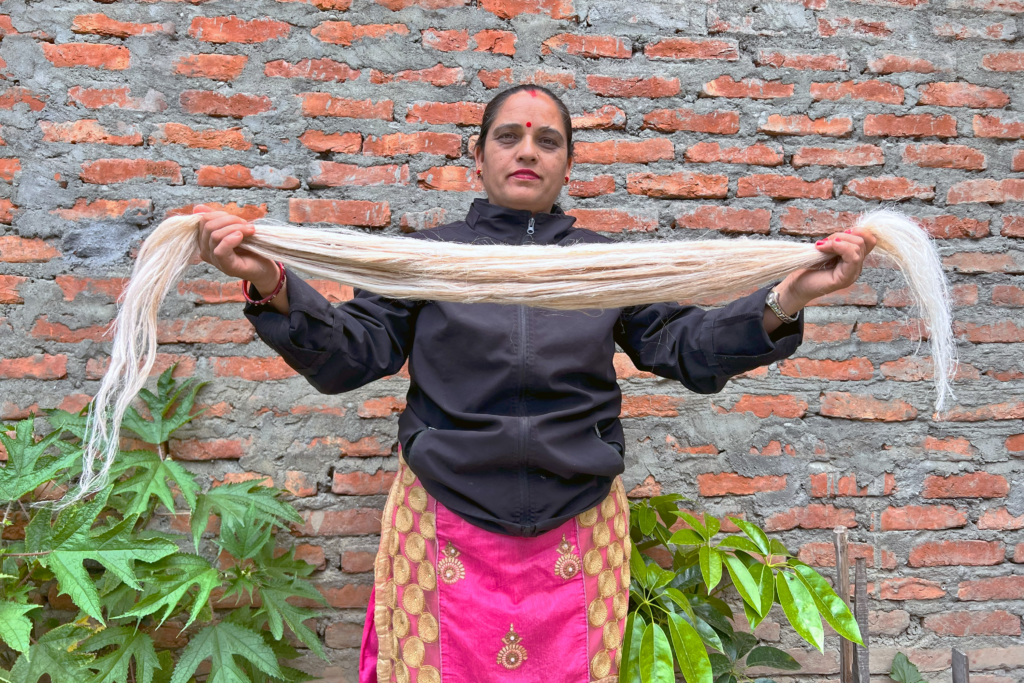
A Nepalese woman holding Himalayan nettle fibre ready to be processed into yarns and fabrics.
Himalayan nettle compared to other natural fibres
Every natural fibre has its own strengths and character.
Compared with cotton, Himalayan nettle generally requires fewer agricultural inputs because it grows wild rather than being cultivated.
Compared with hemp, nettle often offers a softer handle while retaining excellent durability.
Compared with silk, nettle provides a similar natural sheen while remaining entirely plant-based.
These qualities make it a particularly interesting fibre for designers and makers looking to explore alternatives to conventional textile materials.
Supporting communities in Nepal
At Wovenbeyond, our interest in Himalayan nettle extends beyond the fibre itself.
We source our nettle through Himalayan Wild Fibers™, a social enterprise working with communities in Nepal’s Dolakha District. Through responsible harvesting and fair sourcing practices, the organisation helps create seasonal income opportunities for people living in remote mountain regions.
For many families, nettle harvesting provides an additional source of income alongside agriculture, helping support livelihoods while preserving traditional fibre knowledge.
By choosing materials with transparent origins, we can better understand not only the environmental story of a fibre but also the people and communities connected to it.
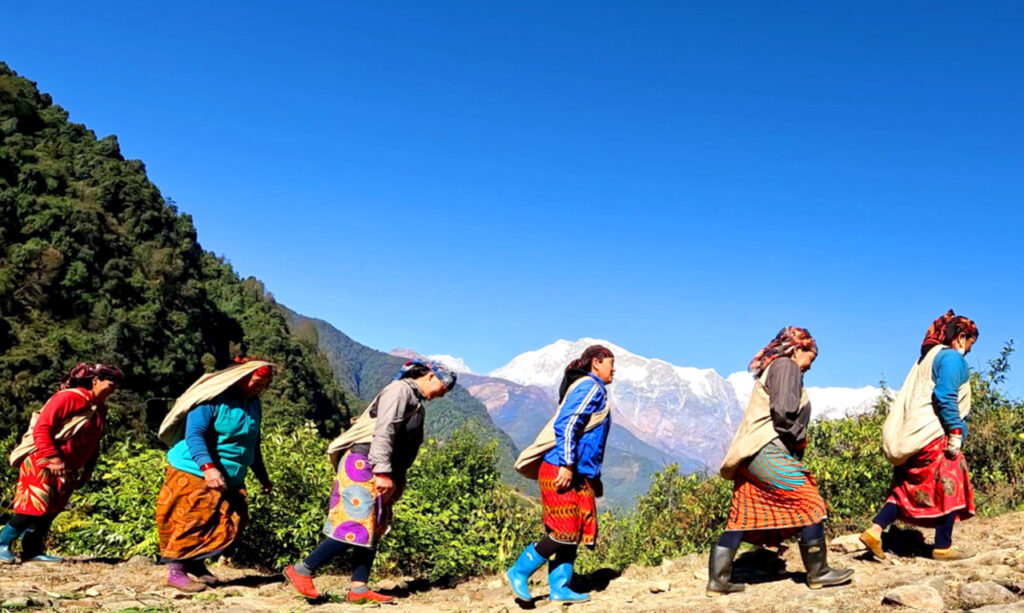
Nepalese women walking to the forest for the Himalayan nettle harvest.
Why we use Himalayan nettle at Wovenbeyond
We believe that materials carry stories.
Himalayan nettle represents many of the values that guide our sourcing decisions: biodiversity, traditional knowledge, traceability, craftsmanship, and a deeper connection between textiles and the landscapes from which they originate.
Its unique combination of strength, beauty, and ecological significance makes it one of our favourite fibres to work with.
As interest grows in regenerative systems and natural materials, Himalayan nettle reminds us that some of the most innovative fibres are not new inventions at all—they are ancient fibres waiting to be rediscovered.
Hand knitted Aran jumper and Sophie scarf with Wovenbeyond yarn - 70% Himalayan nettle; 30% Himalayan nettle composition.
Frequently Asked Questions
Is Himalayan nettle fibre sustainable?
Himalayan nettle grows wild in mountain ecosystems and does not require industrial cultivation, irrigation, or synthetic fertilisers. Responsible harvesting can support biodiversity, soil health, and rural livelihoods.
Does Himalayan nettle sting?
No. Once harvested and processed into fibre, Himalayan nettle does not retain its stinging properties.
Is Himalayan nettle fibre soft?
The fibre is known for its silky appearance and can feel surprisingly soft, particularly when blended with wool, alpaca, or other natural fibres.
Is Himalayan nettle biodegradable?
Yes. Himalayan nettle is a plant-based natural fibre and is biodegradable under appropriate conditions.
What makes Himalayan nettle different from hemp?
Both are durable plant fibres, but Himalayan nettle is often valued for its natural lustre, softness, and connection to wild mountain ecosystems.
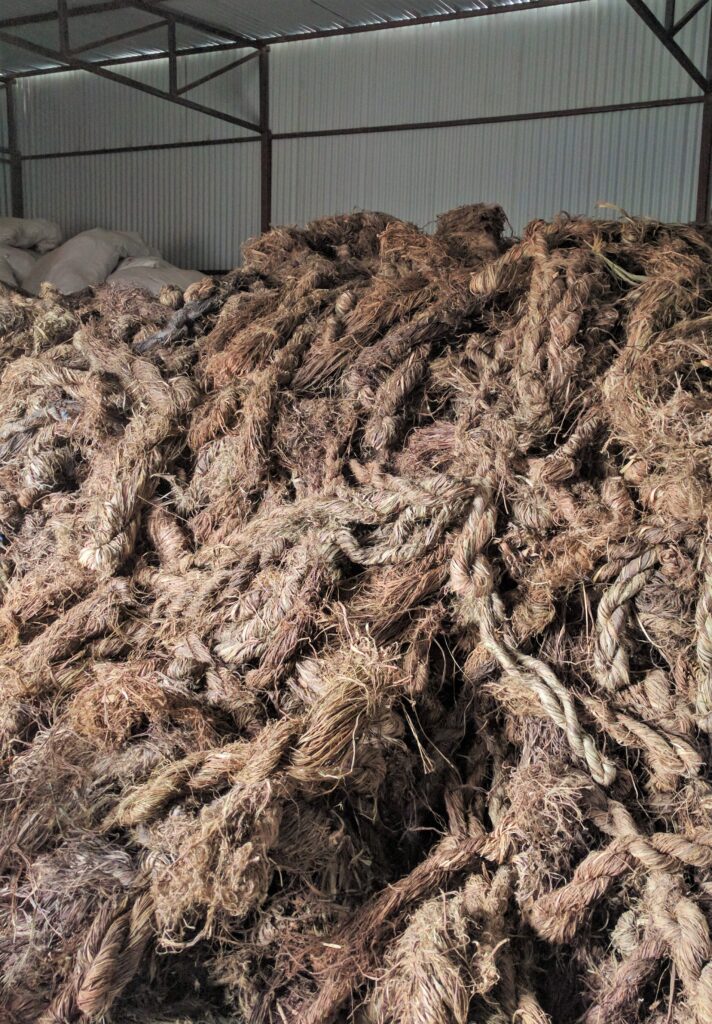
Early stage of Himalayan nettle fibre processing, peeling the plant's bark.